
Spring Exterior Cleaning Guide for Maryland Homes: Vinyl Siding and Surface Washing
Key Takeaways:
- Winter leaves behind salt residue, embedded salt stains, mud, and moisture that dull and damage concrete surfaces.
- Professional treatment can effectively remove salt stains from concrete before they cause long-term deterioration.
- Driveways, sidewalks, entryways, and garage thresholds are most affected by winter salt and staining.
- Early spring algae growth creates slippery surfaces that increase fall risks for homes and businesses.
- A professional sidewalk cleaning service uses pre-treatment solutions, proper dwell time, and controlled pressure to safely restore concrete.
Winter in Maryland leaves its mark, especially on concrete.
By early spring, driveways, sidewalks, and entryways often look dull, streaked, and uneven. White salt film lingers on the surface. Mud is packed into textured areas. In shaded spots, green algae begins to spread.
If your concrete looks worse right after winter, there is a reason. And the good news is, it can be restored safely and effectively.
Why Concrete Looks Worse Right After Winter
Concrete is durable, but it is also porous. Throughout winter, it absorbs moisture, salt, and debris. Snow melts. Salt dries. Freeze-thaw cycles push contaminants deeper into the surface.
By the time temperatures begin to rise, you are left with:
- Chalky salt film
- Embedded dirt and road grime
- Discoloration from standing moisture
- Early algae growth
Rain alone will not fix it. In fact, lingering moisture often makes staining more noticeable.
Spring is the right time to address these issues before they set in for the year.
Salt Residue vs. Salt Stains — What Is the Difference?
It helps to understand what you are seeing on the surface.
Salt residue is the white, powdery film left behind after de-icing materials dry. This typically sits on top of the concrete.
Salt stains, however, occur when salt penetrates the surface and reacts internally. These stains are more stubborn and can appear darker or uneven.
If you want to properly remove salt stains from concrete, surface rinsing is not enough. It requires the right pre-treatment, proper dwell time, and controlled surface washing to lift embedded deposits without damaging the concrete.
Where Staining Shows Up Most (Driveways, Sidewalks, Entries)
In Maryland, the most affected areas are:
- Driveways where vehicles track in salt and slush
- Sidewalks treated repeatedly for ice
- Front steps and entryways
- Garage thresholds
These high-traffic areas absorb the most winter exposure and benefit the most from professional cleaning.
How Algae Returns in Early Spring And Why It Is a Safety Issue
As temperatures climb and moisture lingers, algae returns quickly — especially on shaded concrete.
You will often see it:
- Along the north side of the home
- On backyard patios
- Near downspouts
- On walkways that stay damp
Beyond appearance, algae creates a slippery surface. When wet, it significantly increases the risk of slips and falls.
For homeowners, that is a safety concern. For commercial properties, it can become a liability issue. Early spring cleaning removes algae at the root before it spreads further.
Best Methods for Post-Winter Surface Washing
Effective concrete cleaning is not about blasting the surface with high pressure. It is about using the right process.
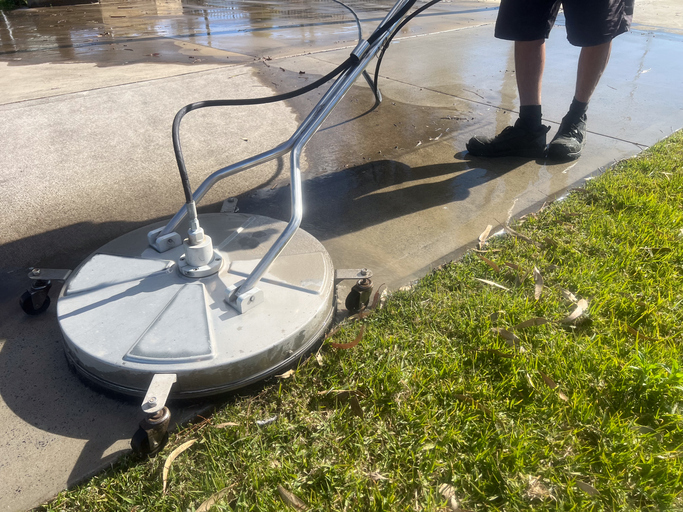
A professional sidewalk cleaning service approaches spring surface washing methodically to protect the material while restoring its appearance.
Pre-Treatment and Dwell Time
The process begins with targeted pre-treatment solutions designed to:
- Break down salt deposits
- Loosen embedded grime
- Neutralize algae and organic growth
Allowing the solution to dwell ensures contaminants lift from within the pores of the concrete. This step is especially important when working to remove salt stains from concrete, as embedded buildup cannot be rinsed away instantly.
Proper Pressure and Surface Protection
Using too much pressure can etch or scar concrete. Using too little leaves streaks behind.
Professional-grade surface cleaners distribute pressure evenly and safely. This ensures:
- Uniform cleaning
- No striping or uneven lines
- Protection of the concrete’s integrity
At Pristine Inc., every surface is evaluated before cleaning to determine the safest and most effective approach.
Special Cases: Oil, Rust, and Organic Stains
Winter may be the primary cause of surface discoloration, but it is not the only one.
Concrete can also develop:
- Oil stains from vehicles
- Rust marks from furniture or irrigation systems
- Leaf and organic staining
Each stain type requires specific treatment. Addressing them correctly improves both appearance and long-term durability.
How Often to Surface Wash in Maryland
For most Maryland homes, annual surface washing in early spring is recommended.
Properties with heavy shade, high traffic, or frequent salt application may benefit from more frequent cleaning.
Routine maintenance:
- Protects the surface from deterioration
- Reduces long-term staining
- Maintains curb appeal year-round
- Improves safety for family and guests
Preventive cleaning is always more cost-effective than surface repair or replacement.
Book Surface Washing for Spring Safety and Curb Appeal
Concrete surfaces frame your home. When they are stained, streaked, or slippery, the entire property feels less maintained.
If winter has left behind salt residue, discoloration, or algae buildup, now is the time to address it.
Pristine Inc. provides professional surface washing and sidewalk cleaning services throughout Maryland. Our team uses proven cleaning methods to safely remove salt stains from concrete, restore brightness, and improve safety without causing damage.
Contact Pristine Inc. today to schedule your spring surface washing service and start the season with clean, safe, and well-maintained concrete.